

 or
or  lines to the right of the URL bar at the top of your browser
Minnetonka Takes Flight With Drones as First Responders
By Deborah Lynn Blumberg
 In 2024, Minnetonka Police Chief Scott Boerboom and Deputy Chief Jason Tait pitched the City Council on an innovative approach: using drones to help officers respond faster to calls, improve safety, and maintain department staffing levels as the Metro Green Line Extension will bring even more visitors to the city.
“We thought the idea made a lot of sense, and we were very supportive of it from the start,” said Minnetonka Mayor Rebecca Schack. While 56,000 residents call Minnetonka home, the city welcomes some 15 million unique visitors each year.
The idea aligned with Minnetonka’s public safety master plan, which emphasizes using technology to solve problems and improve efficiency. It also offered an innovative response to the nationwide challenge of recruiting and retaining police officers while meeting growing public safety needs.
The following year, the Minnetonka Police Department launched Minnesota’s first Drones as First Responders (DFR) program, dispatching drones to provide live aerial support for certain 911 calls. The drones serve as “eyes on scene” before officers arrive. The program has sped up emergency response times, giving officers vital situational awareness, and reducing the time spent responding to false alarms.
“The program has turned out to be better than any of us expected,” Schack said. “The community has been very supportive.”
The City of Minnetonka received a 2026 League of Minnesota Cities City of Excellence Award for the program.
Planning and public buy-in
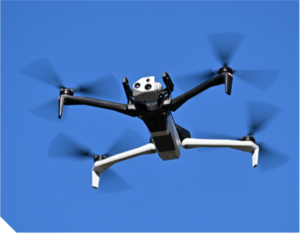
Tait and the department’s analyst supervisor visited the drone vendor’s manufacturing facility in San Francisco to test the technology. The city purchased six dock-based drones that operate from weatherproof docking stations on rooftops throughout Minnetonka. The department also has one traditional drone that officers can transport in a squad car and deploy themselves. Two dedicated pilots operate the dock-based drones.
The program is funded through existing public safety technology budgets, at a cost of $267,000 annually. By offsetting planned staffing expansions, the city estimates savings of more than $5.3 million through 2035.
The drones can operate in light rain or snow, windy conditions, and in temperatures ranging from -4 degrees to 120 degrees Fahrenheit. To launch the program, the city also had to comply with state law governing when and how law enforcement may use drones. For example, acceptable reasons for deployment include situations involving a risk of death or injury or a reasonable suspicion of criminal activity in a public place.
During a 10-month planning period, the police department, fire department, IT department, public works, city leadership, and communications team collaborated on the rollout. Planning also included developing policies covering topics like data retention, Federal Aviation Administration (FAA) compliance, and training.
The city spearheaded an informational campaign to educate residents about the technology, how it would be used, and how it would not be used for mass surveillance.
“Our communications team put together a robust communications plan to make sure our story was being told prior to us starting this,” said Tait.
Minnetonka also created a dedicated webpage for the program where residents can view the most recent drone flights, including when, where, and why they occurred.
“We’ve been very communicative from the beginning, and that’s really helped address any concerns about privacy that people may have had,” Schack said.
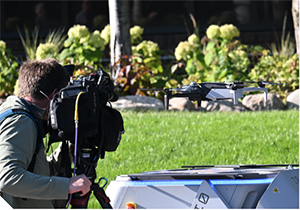
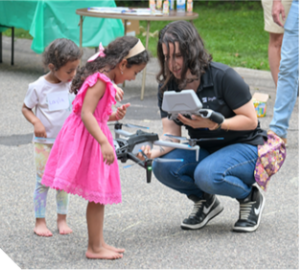
Outreach also included a social media campaign to raise awareness, demonstrations for local news media, and opportunities for residents to meet representatives from the drone vendor during Minnetonka’s Night to Unite events.
“When you’re using technology like this, there’s a rightfully valid concern about privacy, and we’re doing whatever we can to help with that,” Tait said.
Drones in action
The program launched in August 2025. Pilots operate the drones remotely Monday through Friday from 6 a.m. to 6 p.m. When a call comes in that could benefit from aerial support, pilots determine whether deploying the drone is authorized under state law. Once a drone is in the air, responding officers can view the live video feed from screens in their patrol cars.
Since the program began, the drones have completed 699 flights. They have come in handy by ruling out suspicious vehicles, helping officers assess remote areas, and providing valuable information before officers arrive on a scene.
For example, during a recent call involving a person experiencing a mental health crisis who had discharged a firearm, police first deployed a drone to an area inaccessible by vehicle to assess the scene before making contact.
“The drones give us the ability to see what’s happening on the ground and plan how we approach what can be evolving situations so officers aren’t arriving to a surprise,” Boerboom said. “This situation was resolved in a good way.”
Other uses include responding to car accidents, where drones can quickly determine whether occupants are injured, and assisting with searches for people who are lost or injured on hiking trails.
City Manager Mike Funk added, “The drones give officers such a great advantage as they enter or exit a scene.”
Officials also say drones are helping solve crimes by capturing critical evidence immediately.
“That saves detectives time on the back end,” Tait said, “and we can then develop cases quicker with the technology. This has been an entire paradigm shift for how our officers are responding. The drones have been very reliable.”
Benefits beyond policing
Although city officials initially expected the drones to primarily benefit police, the technology has also become a valuable tool for the fire department. The aerial view helps firefighters assess incidents more quickly and determine whether more resources are needed.
“If so, then you can issue a second alarm before any staff ever get there,” Tait said. “You’re getting more resources to that fire scene faster so that you can help to mitigate the damage. It can change the outcome for a fire call.”
During fires, drones also help identify hazards from above. “The fire department really appreciates this added level of enhanced public safety,” Schack said.
The program provides eyes on a scene anywhere in the city within two minutes, about 60% faster than a traditional response. Initial data show that drones were first on scene for 69.5% of the program’s first 699 calls. In about 90% of deployments, the drones provided information that helped responders assess the scene or build a case.
In 18% of deployments, the drone was able to resolve the call without follow-up from officers or other first responders, keeping personnel available for higher-priority calls. For example, a drone can confirm that a suspicious parked vehicle poses no threat.
Operating the program also requires daily safety checks of the entire fleet plus careful monitoring of local airspace.
“We have to comply with federal aviation rules too,” Tait said. “We’re constantly checking if it’s safe in the air, the weather, temporary flight restrictions, notices to airmen, etc.”
Lessons learned
Boerboom said drones will never replace the need for officers, but they have proven to be a valuable tool for enhancing public safety.
“It’s a struggle to hire police officers these days,” he said. “You would never want to replace officers, but we can leverage technology and use it as a supplement.”
For cities considering implementing their own drone program, Boerboom and Tait stress that engaging the community early on is critical. “You really have to be transparent about your procedures, policies, and audits,” Boerboom said.
Tait said cities should think of a successful drone program less as purchasing new equipment and more as building an aviation unit within the police department.
“You need to approach it with that mindset,” he said. “It’s not about adding tech hardware. It has to be viewed at a program level, with robust policy and SOP [standard operating procedures] around it to make sure you’re using technology in the right way and safely.”
With the program’s success, city officials are now planning to expand pilot staffing in 2027 to extend operating hours.
“Our next step in evaluating the program, is we’re looking at having it staffed 24 hours a day,” said Funk. “Generally, we’re staffed during the heaviest call volumes, and we get fewer calls at night. But that doesn’t mean significant calls don’t happen at night.”
Overall, the program has exceeded expectations, and city officials are optimistic about its future.
“We’re experiencing great success with the use of drones,” Boerboom said. “It’s been an overwhelmingly great response.”
Deborah Lynn Blumberg is a freelance writer.