

 or
or  lines to the right of the URL bar at the top of your browser
City Spotlight
Sartell’s Therapy K-9 Program Supports Officers, Builds Community
BRANDON SILGJORD
POLICE CHIEF AND PUBLIC SAFETY DIRECTOR
SARTELL (POPULATION 19,351)
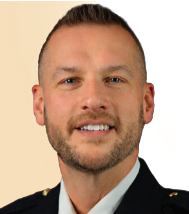 The Sartell Police Department introduced our therapy K-9 program as a proactive step toward supporting both the wellness of our staff and strengthening trust and connection with our community. The opportunity came together somewhat suddenly through a partnership with the Soldier’s 6 organization, which donated our K-9 and provided all the training for our handler. I could not be happier that we jumped on this opportunity when it presented itself.
Policing can be emotionally demanding work, and we recognized the need for healthy, accessible tools that support mental well-being — not just after critical incidents, but as part of our everyday culture. At the same time, we saw an opportunity to create more positive, human-centered interactions between police officers and the people we serve.
Officer Kimber, our therapy K-9, plays a unique and intentional role within both the department and the community. Internally, Kimber supports officers and staff during stressful periods, after critical incidents, and during routine check-ins — providing a calming presence that encourages conversation and connection.
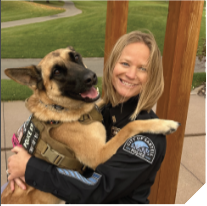
Externally, Kimber is frequently involved in school visits, youth programs, and community events. She has also assisted during calls for service, including situations where someone may be experiencing a mental health crisis. In some cases, Kimber helps ease tension for victims during the trauma of a formal or forensic interview. Her presence often breaks down barriers and makes police officers more approachable, especially for children and individuals who may feel anxious around law enforcement.
The benefits have been immediate and meaningful. Within our public safety facility, Kimber quickly became a staple and our unofficial mascot — helping reduce stress, improve morale, and lighten the mood after tense calls for service.
For the public, Kimber often serves as a bridge, opening the door to conversations that might not otherwise happen and helping reshape perceptions of what modern policing looks like.
What has been most surprising is the depth of impact Kimber has had across all age groups. From seasoned officers to young students, the emotional connection is universal and genuine.
For cities considering a similar program, my advice is simple: Be intentional, commit fully, and view a therapy K-9 not as a novelty, but as a long-term investment in wellness, trust, and community connection.
Grand Rapids Is Redefining Rural Transit With goMARTI
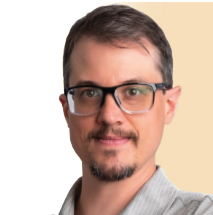 JON DEGE
REGIONAL MOBILITY DIRECTOR
THE PLUM CATALYST AND goMARTI
GRAND RAPIDS (POPULATION 11,747)
In 2022, the City of Grand Rapids launched the goMARTI (Minnesota’s Advanced Rural Transit Innovations) pilot to address a persistent challenge in rural America: providing reliable, accessible transportation that complements traditional fixed-route bus service.
Our goal was to ensure all residents — regardless of age or ability — can connect with jobs, health care, social activities, and cultural destinations.
Operating as a free, on-demand microtransit service, goMARTI uses a mixed fleet of autonomous vehicles, electric vehicles, and wheelchair-accessible vehicles. Riders can book trips through the goMARTI app or by connecting with First Call for Help 211, which provides free, and confidential connection to the local services people need. While the technology is cutting-edge, the implementation is human-centered. Autonomous vehicles always have safety operators on board to assist passengers.
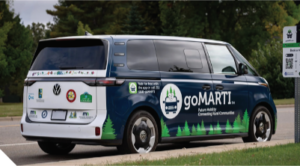
The community response has been overwhelming. Since launching, we have provided more than 46,000 rides. We have received feedback describing the service as “life-changing,” particularly from residents who previously struggled to attend medical appointments or maintain employment due to vehicle issues.
Based on this demand, we recently expanded the service area to link the neighboring communities of La Prairie, Cohasset, Deer River, and Ball Club.
For other rural and small urban cities considering a similar path, our advice is to prioritize partnerships. This project succeeded because the City of Grand Rapids collaborated with The PLUM Catalyst, Minnesota Department of Transportation, Iron Range Resources and Rehabilitation, and technology partners like May Mobility to design and deliver the expanded pilot program.
By listening to riders and tailoring technology to realworld needs, we’ve shown that innovation can thrive outside the big city.