

 or
or  lines to the right of the URL bar at the top of your browser
From Safe Routes to Sustainability: How St. James Turned One Project Into Communitywide Progress
By Deborah Lynn Blumberg
In the City of St. James, what began several years ago as a project to create safer walking and biking routes for students attending the city’s elementary, middle, and high schools grew into a comprehensive effort to build a more equitable, active, and connected community.
To improve quality of life for the rural southern Minnesota city’s roughly 4,800 residents — about half of whom identify as Hispanic — city leaders used a series of grants to fund transportation upgrades while also investing in energy efficiency, community engagement, and public education. Over the past three years, St. James installed Watonwan County’s first municipal electric vehicle (EV) charging station and hosted public workshops, including “Keep Warm, Save Money,” to help residents better understand household energy use.
“We have a pretty active community, and we wanted more sidewalks in St. James,” said Brianna Sanders, the city’s economic development director. “As we got into the transportation work, we realized we had opportunities in other areas, too. Once you do one project, it’s easier to think outside the box and do others. It snowballed from there.”
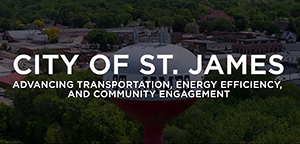
The momentum led to St. James receiving the League of Minnesota Cities’ 2025 Sustainable City Award for its Advancing Transportation, Energy Efficiency, and Community Engagement initiative. The multiyear effort included safer transportation infrastructure, energy audits of public buildings, and bilingual outreach to residents.
The Sustainable City Award recognizes a city that is making progress through the Minnesota GreenStep Cities program — a free and voluntary initiative that helps communities achieve sustainability goals through 29 best practices. As of 2024, 148 cities and tribal nations were participating. The League administers the program in partnership with eight organizations, including nonprofits and state agencies.
Building safe streets for everyone
Beginning in 2022, St. James ramped up efforts in to expand its Safe Routes to School initiative. City officials focused on streets near schools that needed infrastructure improvements to better support walking and biking. Grants that Sanders and her team applied for and received made it possible to install new sidewalks and on-street bike lanes, improving safety and access for students while encouraging more seamless and sustainable transportation choices.
Since then, St. James has received a total of $560,000 in Minnesota Department of Transportation (MnDOT) grants. In addition to supporting sidewalk and bike lane infrastructure, the funding has been used to develop a communitywide active transportation plan, install bike racks, and develop and share educational materials, including for crossing guards. Grants included MnDOT’s Active Transportation Planning Assistance Grant and the Minnesota Boost Grant.
“It all came together very seamlessly,” said St. James City Manager Amanda Knoll. “The stars aligned when we were able to get the grants that we needed, and then we had the right people in place to move projects forward.”
A bike-to-school day held in spring 2025 gave the city an opportunity to showcase the new sidewalks and bike lanes. The event generated positive feedback from residents, which encouraged city leaders to expand their focus beyond school areas and identify other streets throughout the community that could benefit from similar improvements
“A lot of folks are very appreciative of the bike lanes,” Sanders said. “Having that painted line showing that cyclists are supposed to be there really helps with safety. It reinforces the mindset that bikes are welcome on the streets alongside cars.”
Driving green and supporting downtown growth
Around the same time, city officials began researching green transportation initiatives to identify opportunities that could fit St. James’ scale and needs.
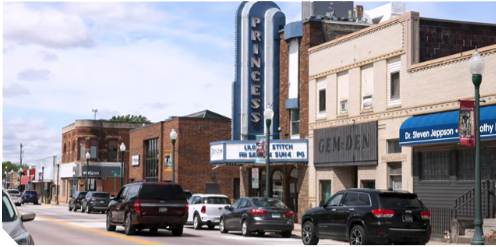
Through the U.S. Department of Energy’s Charging Smart program, St. James trained city staff on electric vehicle rules and regulations and developed the necessary policies and ordinances to allow public EV charging stations. In the spring of 2024, the city installed Watonwan County’s first municipal EV charging station in downtown St. James.
“We’re using it as a green transportation initiative, but it’s also helping to promote our economic development downtown,” Sanders said.
Motorists traveling along a nearby highway began seeking out the charging station, and many spent time in the downtown area while their vehicles charged. According to Sanders, EV drivers often remain parked for more than an hour, visiting local businesses during that time.
“People are surprised that the station is getting used more than they thought it would,” Sanders said. “We can see data showing where people are coming in from, and we have people from the St. Paul area who are stopping in our little town. It proves the idea of this boosting economic development did have merit.”
Another component of the city’s sustainability efforts focused on improving energy efficiency in public buildings. St. James developed energy efficiency plans for facilities such as the public library and the fire hall, helping identify opportunities to reduce costs and improve long-term performance.
Engaging and educating the community
Community engagement and education were major components of St. James’ sustainability efforts. City leaders made a deliberate choice to involve residents early, explain the benefits of projects, and create opportunities for feedback.

To increase awareness of electric vehicles, the city partnered with Climate Smart St. James, an active volunteer group, to host an EV Ride and Drive event. Residents were able to sit in and test drive EVs, while the city’s water department showcased its new electric truck. City staff also shared information about the public charging station and available resources.
“We’re really focused on the educational piece,” Sanders said. “We like to get community feedback to help make sure we’re on the right path with our spending.”
The city is currently gathering resident input to help determine its next major project. “We want to make sure we’re hearing from the community before we move forward with any other funding or grant applications,” Sanders added.
One ongoing challenge, she notes, is that residents consume information in many different ways, which can be difficult for a small city with limited resources. St. James relies primarily on its city newsletter and website to share information.
“Those are the main ways we get our information out there,” said Sanders. “We’re a small community, and information can travel fast. We want to make sure that it’s the right information that people are getting.”
Small projects, big impact
Alongside its larger initiatives, St. James has pursued smaller projects aimed at improving housing quality and energy efficiency. The city’s light department purchased weatherization kits to distribute to residents living in low-income housing. Each kit includes LED light bulbs, door weather stripping, faucet covers, and a furnace whistle that alerts residents when it’s time to change the filter.
“Transportation improvements are easier to see, so we talk about them more,” Sanders said. “But we also want our residents to have quality housing and better energy efficiency.”
Listening to residents has been one of the most important factors in the city’s success, Sanders added. She regularly attends meetings of local service clubs, including the Rotary and Lions clubs, Climate Smart St. James, and La Convivencia Hispana, a nonprofit founded by a St. James resident and El Salvadorian to elevate Latino voices in southern Minnesota.
“With a population so diverse, we always want to make sure that we get our information out there in both English and in Spanish,” Sanders said.
Knoll also credits strong partnerships with civic groups as a key reason the city was able to move quickly and accomplish so much in a short time.
“Those partnerships are the reason we were able to take off the way we did,” Knoll said. “Our staff had the willingness to work with community groups, and that collaboration is what creates real impact.”
For cities interested in pursuing similar initiatives, Sanders recommends starting with a solid team and a manageable first project.
“You start with one project, and you see how it goes,” she said. “We were also really lucky to have a great City Council that has been very supportive. Having that buy-in has really improved our process. It’s made it seem easy.”
Knoll said maintaining momentum will require continued collaboration and attention to details, which starts with ensuring the city’s climate group partnerships stay intact and healthy.
“We’re always going to try to go for active transportation grants to make sure that our sidewalks and our roads are easy for everybody to use” she said. “It’s about doing those small things to make sure we’re maintaining that sustainability. Small work adds up to big things.”
Deborah Lynn Blumberg is a freelance writer.