


 or
or  lines to the right of the URL bar at the top of your browser
Supporting Those Who Support First Responders
By Suzy Frisch
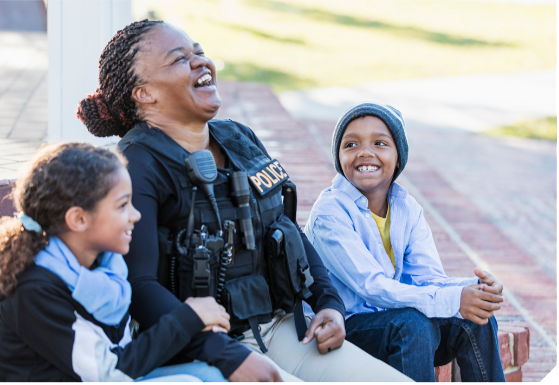 It is a common practice for police officers, firefighters, and other public safety employees to keep quiet about the tragic and traumatic events they experience on the job. Many don’t want to scare or worry their loved ones by sharing what they see each day.
This silence can contribute to burnout, mental health struggles, and early retirement. But when first responders have a strong support system of family and friends, they are better equipped to manage their well-being.
Cities and public safety agencies can help cultivate that support by investing in wellness programs. Those investments pay off by building resilience among employees while improving recruitment and retention, said Erin Holznagel, public safety wellness coordinator for the League of Minnesota Cities Insurance Trust (LMCIT).
A shifting culture around wellness
Younger generations of employees are helping drive a cultural shift toward better work-life balance in public safety and a greater focus on protecting their well-being. Holznagel said wellness resources are among the most significant factors in reducing workers’ compensation claims and improving performance for agencies statewide, citing research LMCIT conducted with Chicago-based Benchmark Analytics.
Employee surveys from nine Minnesota public safety agencies of varying sizes also found a consistent desire for more mental health, physical health, and family support resources.
“Agencies are starting to hear from their staff and employees about the resources they want, and they want their families to feel supported and integrated into an agency,” Holznagel said. “Families are a first line of support for police officers. We haven’t really recognized them in the capacity that we are today.”
Building support for families
That growing awareness has prompted many public safety agencies to explore new ways to support their employees, including family-focused programs. Many, however, are unsure where to start or which approaches are most effective.
This fall, LMCIT is stepping up with a new resource: training from Beyond the Badge. The Colorado-based organization provides consulting, training, and program management for agencies looking to develop wellness, peer support, and family-focused programs. Beyond the Badge will offer both in-person training and webinars in September for public safety agencies.
Alicia Romero, family support coordinator for the Douglas County Sheriff’s Office and the Colorado Fallen Hero Foundation, founded Beyond the Badge after the mass shooting in Aurora, Colorado. As a former police cadet, jail deputy, emergency communications dispatcher, and family liaison, and the wife and daughter of law enforcement officers, Romero understands what relatives experience following critical incidents. She created Beyond the Badge to help law enforcement agencies better support both employees and their loved ones.
“When it comes to being able to survive these horrible things, you need your family to be there for you,” Romero said. “You need them to understand what you are going through, what your first responder is going through, what is reasonable behavior, and what is alarming behavior. A lot of times a firefighter or police officer doesn’t understand what they are going through themselves.”
Preparing families for the job
Beyond the Badge training for agencies covers why family support matters and how it can strengthen recruitment, retention, and resilience. It also dives into the benefits of family academies, including building employee loyalty from day one. Family academies can operate as a half-day, full-day, or multi-session offerings for first responders and their support system.
When working with agencies, Romero recommends creating a family academy that includes new recruits and lateral hires. Another option is for employers to run an annual family academy for their entire agency. These programs give family members and close friends an opportunity to meet one another, build a support network, and better understand the realities of public safety work. Participants also learn how to access resources for themselves and their loved ones.
Critical incident training is another key component. It prepares families for potential situations by explaining what they can expect, what resources are available, and how they can best respond.
“It prepares people for what can happen after a traumatic situation,” Romero said. “We teach them how they can absorb the challenge of first responder life and career, and best support their first responder through the challenges and traumatic situations they will ultimately go through.”
A worthwhile investment
Romero believes family academies should be a top priority because they are a relatively low-cost way to make a meaningful impact, including on recruitment and retention. At the Douglas County Sheriff’s Office, family academy has become a valuable recruiting tool, with each class generating one to four new recruits through attendees and their personal connections.
“Wellness is a big draw for a lot of newer recruits,” Romero said. “They don’t care as much about what they get paid as they do about how much you care about them.”
Investing in wellness helps first responders stay healthy in mind, body, and spirit so they can withstand the rigors of the job while maintaining strong personal relationships.
“The end game for us is for our cops to make it to and past retirement in a healthy form,” Romero said. “It all goes back to caring for our people and making sure they are healthy to protect their careers and who they are as people.”
Suzy Frisch is a freelance writer.