

 or
or  lines to the right of the URL bar at the top of your browser
Celebrating Excellence in Minnesota City Leadership
Andrew Tellijohn
The League of Minnesota Cities (LMC) presented its top honors at its 2026 Annual Conference, recognizing three public officials for their exceptional contributions to local government.
The C.C. LUDWIG AWARD honors elected city officials, the JAMES F. MILLER LEADERSHIP AWARD recognizes appointed city officials, and the EMERGING LEADER AWARD celebrates city leaders with fewer than eight years of experience.
This year’s winners are Minnetrista Mayor Lisa Whalen, Sauk Rapids City Administrator Ross Olson, and Winthrop City Administrator Michael Looft.
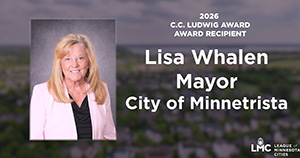
LISA WHALEN
MINNETRISTA MAYOR
C.C. LUDWIG AWARD WINNER
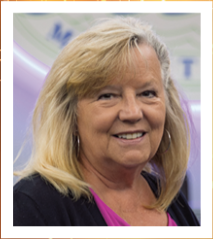
Minnetrista was a city divided when Mayor Lisa Whalen’s predecessor resigned and she won a 2014 special election. City residents were unhappy with the quality of their water and wanted a sensible solution. The City Council at the time favored a more complex plan with a larger price tag. City staff preferred the idea of building multiple smaller treatment facilities focused on removing iron and manganese.
Within months of being elected, Whalen and her colleagues were able to build consensus around the staff’s plan, which solved the water quality issue at half the proposed cost of her predecessor’s plan, improving the city’s drinking water and bolstering public health.
“Based on all the information I had, I decided to go with the recommendation that staff made,” Whalen said. “When we were all sworn in, it was just kind of directing the discussion and talking about the best path forward for the city.”
While those negotiations were taking place, Whalen knew the Council needed to rebuild trust with staff and the community. Over the course of a year, she implemented quarterly all-staff meetings led by herself and a rotating council member.
“At those meetings I just reassured them that we’re not here to clean house and get rid of people,” she said. “It was really listening and trying to address their concerns and the issues at hand.”
Restoring trust and expanding outreach
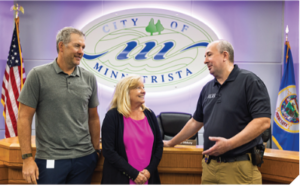
Listening and communicating have been Whalen’s hallmarks, said Michael Barone, who served as interim city administrator under the previous mayor and was quickly named to the permanent role when Whalen took office.
In the years since, Whalen created the annual “State of the City” event to engage residents. She connects with the community at local gatherings, including Trista Day, neighborhood meetings, and town halls. To improve communication and foster community spirit, she also championed website upgrades, a municipal Facebook page, regular email blasts, and an annual tree lighting event.
Whalen has also been an advocate for local law enforcement, implementing the “check up from the neck up” mental health program and leveraging her relationships to build a police department fitness center. When she reached out to Bahram Akradi, founder and CEO of Lifetime Fitness, he volunteered to design the facility and supply the equipment.
“He said, ‘No problem, I’ll provide all the equipment and my team will come in, design it, and we’ll build it for you,’” Whalen said.
Advancing regional collaboration and growth
Whalen’s reach extends well beyond city borders. Hennepin County Commissioner Kevin Anderson said she embraced the Hennepin County Embedded Social Worker Program — an opt-in initiative where cities help fund a full- or part-time social worker to assist law enforcement on human services related calls, such as assisting elderly residents.
“Minnetrista was an enthusiastic adopter of it,” Anderson said. “It takes commitment to do that because there are city resources that go into it.”
Working regionally is just part of the job for Whalen, who acknowledges that Minnetrista cannot do everything alone. Economic development has prospered under her leadership, marked by the growth of the Woodland Cove mixed-use development into a vibrant economic hub — anchored by a new 48,000-square-foot Mackenthun’s Fine Foods featuring a Caribou Coffee and The Cove Wine & Spirits.
“You have to be collaborative when you’re a smaller community like ours,” she added. “And you have to create respect, not only among your staff and council, even among your citizens, but also other entities and governmental agencies.”
A legacy of results
As the Council became more united over the years, Whalen’s tenure became known for transparency and getting results. She helped direct American Rescue Plan Act funds to expand broadband in Minnetrista and balanced community growth with preserving the city’s quiet, rural feel.
“We looked at our growth and said we’re in favor, but we have to be able to manage it, it has to be manageable growth,” she said.
She is currently developing a long-term infrastructure plan aimed at keeping costs low and predictable.
“Residents do get assessed as part of the project,” said Barone, who is now retired. “She’s always trying to make sure it’s not too wild an assessment. She’s not afraid to roll up her sleeves and do what needs to be done.”
Whalen is unsure what her legacy will be, or if it matters. After 12 years on the City Council, four years off, and 12 years as mayor, a lot has happened. But the water treatment situation has come full circle. As 2027 approaches, Minnetrista is completing a third water treatment plant to meet demand, and the city has hired an engineering firm to draft a citywide water infrastructure plan.
Ultimately, Whalen believes collaborative leadership prevents surprises and ensures everyone is heard.
“You bring people into the fold, so to speak, and create a team mentality,” she said. “I’m one vote. You have to really create respect among council members and you have to work together.”
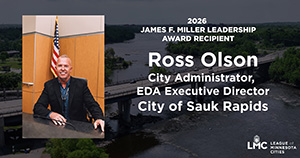
ROSS OLSON
SAUK RAPIDS CITY ADMINISTRATOR
JAMES F. MILLER LEADERSHIP AWARD WINNER
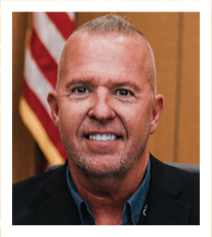
Unanimously, those who nominated Ross Olson for the James F. Miller Leadership Award cite his passion and his determination to tackle every challenge with dedication and purpose.
Olson doesn’t deny it. His energy has driven results since he arrived at the city nearly 25 years ago, amidst a contentious debate over replacing the obsolete Sauk Rapids Regional Bridge.
The initial plans for the World War II-era bridge would have destroyed much of the city’s downtown area. Instead, Olson’s leadership paved the way for a complete revitalization.
As part of the $58 million project, city planners relocated several local businesses to prevent them from closing, while rerouting the bridge to connect directly to 2nd Street North as a four-lane road with roundabouts.
The effort included the Downtown Impact Mitigation Program, which provided financial support to the impacted local businesses. Additionally, land near the new bridge was integrated into regional trails and the Mississippi riverfront, preserving historical elements while transforming downtown into a walkable commercial and recreational destination.
“We came up with a new comprehensive plan that identified what we want the new downtown to look like,” said Olson, who has served as city administrator and executive director of the city’s economic development authority since 2002.
Transforming parks and community spaces
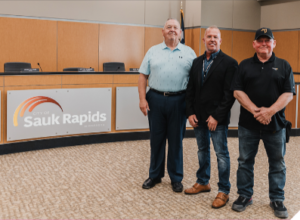
While the bridge was his highest-profile project, Olson has also overseen the expansion of three industrial parks, positioning Sauk Rapids as a central Minnesota leader in offering business incentive packages and financing.
Council member Ellen Thronson worked with Olson to reimagine Lions and Southside parks, which sit along the river in downtown Sauk Rapids. She commended his open-mindedness and “all-in” nature, as well as his commitment to creating memorable public spaces.
“He’s impassioned to do cool, great, innovative things here in the city,” she said. “You’d be hard-pressed to find people who get just as excited as he does.”
Those parks now form The Clearing, a central hub for outdoor recreation and events like the city’s “Rock the Riverside,” a 13-week summer outdoor concert series that Olson personally books and organizes.
“When we started six years ago, we’d get about 500 people to show up every Thursday,” Olson said. “Now we get over 2,000 and it’s a family-friendly event. They come from Brainerd, they come from Hutchinson, they come from all over to this event.”
“And everybody loved it — the excitement throughout the community was incredible,” said Marla Elness, festival coordinator for the Sauk Rapids River Days Festival and the Sauk Rapids Jingle & Mingle Celebration.
Elness and Olson have built a partnership rooted in collaboration, trust, and a shared passion for serving the community. Elness values his enthusiasm and willingness to embrace innovative ideas and his leadership in rallying the City Council and staff behind the city’s signature events. She also appreciates the respect he shows volunteers.
“It’s amazing how he turns his vision into lasting improvements for our community,” she said. “He has a genuine passion for helping others succeed and celebrating their accomplishments.”
Building strong regional partnerships
Supporters frequently point to Olson’s collaborative spirit. The bridge project, for example, gained critical legislative backing through the Area Planning Commission, which includes Sartell, St. Cloud, and other neighboring communities.
“We all have our individual needs and there is a level of competitiveness that happens at the state and the federal level, but we also work really well to identify regionally important, regionally significant projects,” Olson said. “Our representatives have said over and over ‘You know how much easier that makes my job that you all are agreeing. This is the one that I should work on?’”
Olson has also partnered closely with several school district superintendents over the years. The city purchased 155 acres of farmland near the site where the district later built Sauk Rapids-Rice High School, which opened in 2003.
While much of the city’s parcel remains wetlands, the rest became Mayhew Creek Park, featuring fields for baseball, softball, football, and soccer.
“That was our first collaboration on how to maximize our dollars because even though it’s for organized play at the school, this doesn’t mean that other people, baseball associations, softball associations, don’t go up there,” Olson said.
The park is now expanding to include a new early childhood development center and the future Sauk Rapids Community Center.
“We can stretch that dollar by partnering with them,” he added.
Through all his success over the last 25 years, Olson still jokes about how reluctant he was to take the city administrator job. He was serving as community development director — a role he loved — and tried three times to decline the promotion before then-Mayor Harold Jesh stepped in.
“He said ‘If you fall off, I’ll help you up,’” Olson said. “I said, ‘Fine, I’ll do it.’”
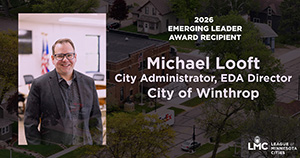
MICHAEL LOOFT
WINTHROP CITY ADMINISTRATOR
EMERGING LEADER AWARD WINNER
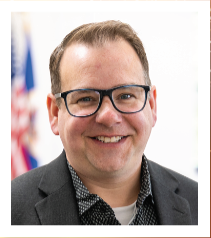
Winthrop City Administrator Michael Looft firmly believes small cities achieve more by working together.
As the director of the city’s economic development authority, he champions the 17 Mile Economic Development Corridor — a partnership between Winthrop, Gibbon, and Fairfax rooted in the Southern Minnesota Initiative Foundation’s Rural Entrepreneurial Venture Program. The initiative unites local businesses, civic organizations, and residents to drive regional economic growth.
Looft also is a leading voice for STREAMS (Southwest Minnesota Treatment and Reuse for Economies and Advanced Management of Sustainability), bringing together Winthrop, Lafayette, New Auburn, and industrial partners to reuse water for agriculture and manufacturing.
“It predates Michael coming to Winthrop, but it had never gotten anywhere,” said Mayor Julie Trebelhorn. “When it came up while he was new, I think he realized this had a lot of potential for Winthrop and the communities around us. He has been the one who manages and wrangles everybody together for meetings, though not in an overbearing way — he just brings people together.”
Participating city leaders meet monthly on economic development issues and regularly connect on other topics.
“If these city administrators aren’t in the same room at least three times a month, it’d be very unusual,” Looft said. “It is definitely one of my priorities. We’ve been learning a lot from national organizations that say regionalization of services makes sense. If I have to be the collaborator and the person that keeps asking the questions, I will. I keep doing it because I think it’s better for the communities.”
Prioritizing shared regional services

Looft has spearheaded talks with neighboring cities to share emergency medical services, protecting residents from long wait times for distant ambulances from other cities. He is also negotiating with Gaylord and Gibbon to establish the consolidated Tri-Line Police Department to boost recruitment and retention.
He acknowledges that regionalization isn’t always popular at first but believes open dialogue builds consensus. That message — that it is better to collaborate than to lose services entirely — frequently resonates with residents.
“We can’t continue to live in silos and think we’re going to continue to have ambulance services in every single town or a clinic in every single town,” he said. “Everything we have done in the last five years we look at and say, ‘Your neighbors need help too, is this something we’re also facing? How do we bring it together without costing more money?’”
Driving local improvements in Winthrop
Looft remains equally dedicated to Winthrop’s needs. He worked with Police Chief Logan Anderson to establish a K-9 unit and helped create an ambulance cadet program to ensure strong staffing, earning praise from Ambulance Service Captain Kristin McCue.
“We have 100% support and backing from Michael, which is not heard of in many cities,” McCue said. “Michael will help us go and write grants, he will find things to help us. If you ask him about anything, he’ll be the first person to shoot you an idea. We have that 100% backing.”
Looft’s flagship local initiative since becoming city administrator in 2021 was leading the 2nd Street renovation project to fix aging and failing infrastructure. He hosted multiple work sessions to gather input from businesses and community members, and collaborated with local, county, and state agencies to transform downtown.
By reclassifying 2nd Street as a state-aid highway, rather than a city street, Looft helped secure state transportation funds. This allowed the city to upgrade underground sanitary and storm sewers, replace water mains to boost pressure, and build wider, ADA-accessible sidewalks — all while minimizing costs for local residents.
Trebelhorn noted that Looft is an exceptional listener who never asks colleagues to do something he wouldn’t do himself, whether that means unloading vehicles on community cleanup days or assisting street crews during a power outage.
“He likes to get out and get involved, get his hands dirty,” she said.
A shift in perspective
This hands-on, community-first attitude is what drove Looft into local government in the first place. Seven years ago, he walked away from a rising corporate career at Walmart to pursue public service, taking over as president and CEO of the New Ulm Area Chamber of Commerce before stepping into city management.
“I just decided it was time to do something more fulfilling,” he said. “It’s nothing wrong with the corporate structure, I just didn’t feel like I was giving back to communities.”
Andrew Tellijohn is a freelance writer.