


 or
or  lines to the right of the URL bar at the top of your browser
Wildfire Smoke Creates Dangerous Conditions for Minnesota Outdoor Workers
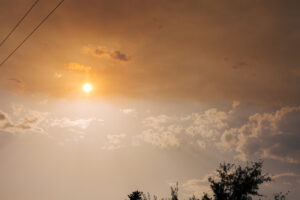 Wildfire smoke has rapidly deteriorated air quality across much of Minnesota, creating hazardous conditions for municipal employees who work outdoors. Smoke from large wildfires in northeastern Minnesota and southern Canada has pushed fine particle pollution (PM2.5) to some of the highest levels ever recorded in parts of the state, prompting an Air Quality Alert through Friday, July 17, 2026.
Now is the time to monitor conditions and take steps to protect employees working outside.
Impacts of wildfire smoke
Wildfire smoke contains tiny particles (PM2.5) small enough to travel deep into the lungs and enter the bloodstream. These particles aren’t just from burning trees; they can also contain chemicals and debris from homes, vehicles, and other materials consumed by the fire.
Exposure can cause:
- Eye, nose, and throat irritation
- Persistent coughing or wheezing
- Difficulty breathing
- Asthma attacks
- Chest pain
Long-term exposure may contribute to reduced lung function, chronic bronchitis, worsening asthma, heart problems, and other serious health effects. Workers over age 65 or those with underlying heart or lung conditions are at greater risk.
When should employers take action?
Minnesota Department of Health (MDH) guidance treats an Air Quality Index (AQI) of 151 or higher (“Unhealthy”) as a threshold at which air quality poses a risk to everyone — not just sensitive groups.
Many areas of Minnesota are currently experiencing AQI readings well above this threshold, with some locations reaching “Hazardous” levels.
Employers should monitor local conditions using AirNow.gov or the Minnesota Pollution Control Agency’s air quality resources.
Protecting outdoor workers
When AQI reaches 151 or higher, employers should consider:
- Communicating current air quality conditions and health risks to employees.
- Training employees on wildfire smoke hazards and symptoms.
- Reducing exposure by moving work indoors when possible, relocating work to areas with better air quality, adjusting schedules, reducing strenuous work, or increasing rest breaks.
- Providing NIOSH-approved N95 respirators for voluntary use.
These precautions are especially important for municipal employees who work outdoors for extended periods, including public works crews, utility workers, parks staff, and construction workers.
Stay informed
Air quality conditions are changing rapidly and can vary significantly across the state. Continue monitoring forecasts and local conditions before assigning outdoor work.
With cleaner air expected to move into Minnesota after a cold front passes Friday, conditions should gradually improve. Until then, limiting outdoor exposure and taking appropriate precautions can help protect employees from one of the most significant wildfire smoke events Minnesota has experienced in recent years.