


 or
or  lines to the right of the URL bar at the top of your browser
Hoyt Lakes Puts Safety First in Planning Its Annual Water Carnival
By Claudia Hoffacker
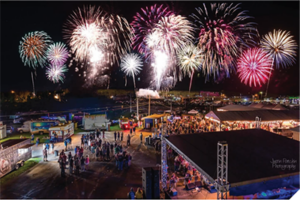
Big events like festivals and carnivals bring people together to celebrate and have fun, but it’s important to keep safety in mind — especially in a small city, where events can draw more than twice the population.
For 71 years, the Hoyt Lakes Water Carnival has been the highlight of late July. Last year’s 70th-anniversary celebration drew 8,000 people, effectively quadrupling the city’s population of 2,000.
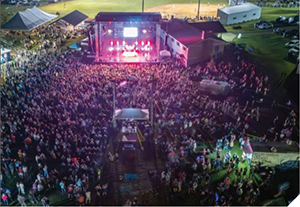
The volunteer Water Carnival Committee works nearly year-round to plan the four-day event, which includes a parade, several concerts, a softball tournament, a “gigantic fireworks display,” a variety of other activities, and, of course, plenty of food and drink.
Working with public safety
A big part of the planning process is collaborating with the local police department, fire department, and ambulance service.
“Our local law enforcement has a huge presence there,” said Nikki Swanson, a Hoyt Lakes resident who has been a member of the Water Carnival Committee for 21 years. “Our ambulance crew is there, too. Within seconds, they are available for anything.”
She said organizers have been fortunate that there have never been any major emergencies during the event, but they make sure they are ready for anything.
“We have as many as 12 officers onsite for the carnival’s bigger events, like the concerts,” said Police Chief Jorden Klovstad of the East Range Police Department, which serves the cities of Aurora and Hoyt Lakes. “We only have six officers and me, so we collaborate with the State Patrol, St. Louis County Sheriff ’s Department, and some other city police departments in the area.”
Insurance coverage and contracts
In addition to having plenty of law enforcement officers and emergency responders onsite, the Water Carnival Committee — which is a separate entity from the City of Hoyt Lakes — carries a $2 million insurance policy, as well as extra insurance for the fireworks. Vendors are also required to carry their own insurance, Swanson said.
Although not an official sponsor, the city plays a major role in the Water Carnival, providing about $50,000 in donations and in-kind services, said City Administrator Dean Weiberg. While the city is happy to participate, it also makes sure all the proper permits and contracts are in place to limit its liability. In addition, its policy with the League of Minnesota Cities Insurance Trust would cover many mishaps for which the city might be liable.
In most cases, though, the Water Carnival Committee is the responsible entity, and it has a contract with the city that spells that out. Among other things, the contract states that the committee agrees to “hold harmless the City of Hoyt Lakes … from all claims, suits, or actions of whatsoever nature resulting or arising from this activity.”
“It’s the biggest event of the year, and it’s a lot of work for everybody,” Weiberg said. “And, yes, there are always going to be safety risks, but we really haven’t had any big incidents.” The benefits of the carnival definitely outweigh the risks, he added. “It’s huge for businesses, and the residents love it.”
Protecting people from themselves
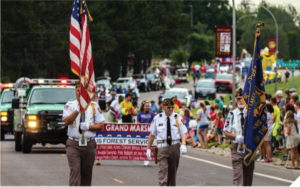
While there have never been any big emergencies, police and emergency responders stay busy handling smaller incidents throughout the event, Klovstad said.
Most incidents involve people getting overheated or drinking too much, he said. That often leads to a few fights. There are also usually a few minor injuries on the softball field, Swanson added.
Klovstad said all the police departments bring extra equipment, such as ATVs for patrolling the area’s trails, and transfer vehicles for taking people to the hospital, jail, and detox center.
“We just want to keep everyone safe, and that often means protecting people from themselves,” he said. “Relying on the help of surrounding communities is the most important thing for us. As a small agency, we know we can’t do everything ourselves.”
Once the event is over, the Water Carnival Committee meets with representatives from the city and police department to debrief. They discuss what went well, what went wrong, if anything, and what changes they need to make for the next year.
“With that many people, we’re lucky we’ve never really had too much of a problem,” Swanson said. “We really always have a good atmosphere. The collaboration we have with the city is so helpful. And the close working relationship we have with the law enforcement and emergency services is the best thing we rely on for safety.”
Claudia Hoffacker is a freelance writer.