


 or
or  lines to the right of the URL bar at the top of your browser
Protecting Municipal Facilities from Lightning and Power Surges
 Guest post by Marc Dunker, LMCIT senior loss control consultant
Lightning protection is not just about preventing a fire — it’s about keeping essential city services running. From server rooms, emergency communications, to water and wastewater systems, a single surge can disrupt critical operations.
A comprehensive protection strategy requires a multi-layered approach that addresses direct strikes and internal surges.
1. Structural Defense: Lightning Protection Systems
The first line of defense is an external lightning protection system (LPS), designed to intercept a direct strike and safely channel it to the ground.
- Air terminals (lightning rods): Installed at high points, air terminals provide a safe path for lightning current. They do not “attract” lightning but instead provide a preferred attachment point and safely conduct lightning current to ground, reducing the risk of structural damage.
2. Electrical System Grounding & Surge Protection
While rods protect the structure, internal electronic networks require specialized Surge Protective Devices (SPDs) and robust grounding.
Layered Surge Protection:
- Type 1 SPDs: Installed at the service entrance to handle high-energy surges from lightning
- Type 2 SPDs: Located at main distribution panels to protect against switching surges and residual lightning energy
- Type 3 SPDs: Point-of-use protection for sensitive electronics and computer networks.
Low-Resistance Grounding: The National Fire Protection Association (NFPA) National Electric Code (NEC) permits a grounding electrode resistance of up to 25 ohms, though critical infrastructure and sensitive electronics often require significantly lower resistance (e.g., 5 ohms or less).
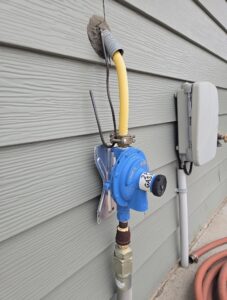
3. Critical Bonding: Yellow Jacket CSST
A frequently overlooked vulnerability in commercial buildings is the gas piping system, particularly yellow jacket Corrugated Stainless Steel Tubing (CSST).
- Mandatory Direct Bonding: Standard yellow CSST must be bonded to the building’s electrical grounding electrode system. This is best accomplished by hiring a licensed electrician or gas installer.
- The Goal: Ensure all metal components — plumbing, HVAC, and gas lines — remain at the same electrical potential, preventing dangerous side flashes or arcs that could ignite a fire.
- Why It Matters: A single unbonded pipe or a missing surge protective device can result in equipment damage, service disruption, data loss, or even fire.
For cities, protecting local infrastructure means protecting residents.
Consulting a certified lightning protection professional helps ensure systems are properly designed, installed, and aligned with NFPA 780 and NEC requirements.
Work safely – your community depends on it.
Additional Resource:
Prairie Electric: Why Your Business Needs Commercial Surge Protection