


 or
or  lines to the right of the URL bar at the top of your browser
Tips for Safely Using Lithium-Ion-Powered Tools
Guest post by Thomas Marx, LMCIT loss control consultant
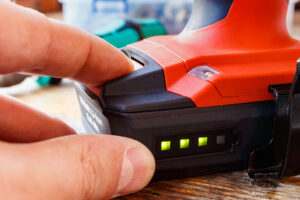 Battery‑powered tools and devices are becoming an increasingly popular option for municipalities. Compared to traditional gas‑powered tools, they offer several advantages: quieter operation, easier setup, and lower maintenance costs.
However, one of the biggest factors to be aware of is the lithium‑ion batteries that come along with these tools.
The National Fire Protection Association states, “While these batteries provide an effective and efficient source of power, the likelihood of them overheating, catching fire, and even leading to explosions increases when they are damaged or improperly used, charged, or stored.”
Fortunately, with proper use and storage, battery-powered tools can remain a safe, reliable, and cost-effective option for municipal operations.
Below are key safety practices cities should follow when using litium-ion battery-powered tools.
Best Practices for Lithium-Ion Battery Safety
Read the manufacturer’s instructions
Always read your manufacturer’s instruction manual (battery, charger, and tool) for complete information.
Use the complete manufacturer system
Only use original manufacturer system components — tool, battery, and charger. Each manufacturer uses its own control circuitry, which allows the system to communicate properly. This circuitry monitors and controls critical functions, such as:
- Cell balance
- Energy levels
- Energy flow in and out of the battery
- Battery temperature
Inspect batteries regularly
Inspect your battery regularly for signs of damage, such as:
- Crushing or dents
- Cuts or punctures
- Melted plastic
- Liquid leakage
Do not use a battery that has received a sharp blow, been dropped, or shows signs of damage.
Never modify, disassemble, or tamper with a battery
The performance of damaged or altered batteries can be unpredictable and dangerous. Do not short‑circuit the battery terminals. A short circuit can occur if a metal object contacts both the positive and negative terminals. Do not store or transport batteries in a container with loose metal objects such as coins, keys, or nails.
Be mindful of abnormal battery behavior
Warnings signs of abnormal battery performance may include:
- Battery not fully charging
- Battery loses charge quickly
- Charging takes unusually long
- Sudden drops in tool performance
- Unusual LED indicator activity
- Leaking fluids or melted plastic
If you notice any of these issues, stop using the battery immediately.
Store batteries within safe temperature ranges
Use and store your battery within the temperature limits specified by the manufacturer. Do not store batteries in closed locations where sunlight may cause elevated temperatures, such as near a window or inside a vehicle.
Disconnect chargers when not in use
As a general practice:
- Unplug battery chargers when not in use
- Remove batteries from charger once charging is complete
- Do not store batteries on their chargers
Keep batteries away from heat and water
Never burn, incinerate, or expose batteries to a heat source — they may explode.
Similarly, do not immerse batteries in water or allow fluids to get inside. Conductive liquids can cause damage leading to fire or explosion.
Store batteries in a cool, dry location away from combustible materials and corrosive gases.
Dispose of batteries properly
If you suspect a battery has a problem:
- Do not use it
- Do not ship it
- Do not dispose of it in regular trash
Follow federal, state, and local regulations for battery disposal. Contact a battery recycling agency for appropriate drop‑off locations.
Even discharged batteries contain some energy. Before disposal, cover the battery terminals with electrical tape to prevent short circuits.
Never attempt to revive a damaged battery
If a battery will not take a charge, do not attempt to jumpstart it using other power sources. Doing so can cause damage that may lead to burns, fire, or explosion.
By following these best practices for lithium-ion battery safety, cities can help keep employees safe on the job, protect city property, and extend the life of their equipment.