


 or
or  lines to the right of the URL bar at the top of your browser
Smart, Safe, and Sustainable: Best Practices for City Deicing
Guest post by Garrett Johnson, LMCIT loss control consultant
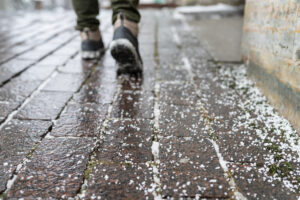 Winter weather brings some of the toughest safety challenges for cities. Snow and ice can increase risks for residents, employees, and visitors, but a thoughtful, informed approach to deicing can significantly reduce slips, trips, falls, and vehicle accidents, all while balancing cost and environmental impact.
Plan ahead and monitor conditions
Cities should monitor forecasts and prepare for weather conditions that may require salt or other deicers. Remember, road salt loses effectiveness below 15 degrees Fahrenheit. At these lower temperatures, sand can help provide traction, though it won’t melt ice. Crews should take their time when applying deicer as rushing increases the risk of accidents and injuries, whether behind the wheel or on foot.
Apply salt wisely
When it comes to salt, more is not better. The Minnesota Pollution Control Agency recommends applying no more than four pounds of salt per 1,000 square feet. For reference, one pound of salt fits in a 12-ounce coffee mug. Using a handheld spreader rather than scattering salt by hand can help ensure more even, efficient coverage. City staff applying deicer should always wear appropriate personal protective equipment and footwear. This not only shields them from winter weather but also helps prevent slips during application.
Match the deicer to the conditions
Not all deicers are the same. Each product has a “lowest practical melting temperature” — the temperature at which it remains effective it remains effective. Reviewing your inventory and understanding these characteristics helps ensure the right product is used for the right conditions.
For more detailed guidance, cities can refer to the Minnesota Pollution Control Agency deicer fact sheet.