


 or
or  lines to the right of the URL bar at the top of your browser
Applying the Hierarchy of Controls: A Smarter Way to Solve Safety Issues
Guest post from Olivia Bontems, LMCIT loss control consultant

When it comes to workplace safety, it is easy to default to the most visible solution: hand out PPE, post a warning sign, or send out another reminder email. While those steps can help, they are often the least effective way to control hazards. That’s where the Hierarchy of Controls comes in. It’s a smarter, more strategic approach to identifying and addressing safety issues, and it works especially well in municipal operations where employees wear many hats and face a wide range of risks.
What is the Hierarchy of Controls?
The Hierarchy of Controls was developed by the National Institute for Occupational Safety and Health (NIOSH) to reduce exposure to hazards, ranked from most to least effective:
Elimination – Physically remove the hazard
Substitution – Replace the hazard with something safer
Engineering Controls – Isolate people from the hazard
Administrative Controls – Change how people work
Personal Protective Equipment (PPE) – Protect the worker with proper gear
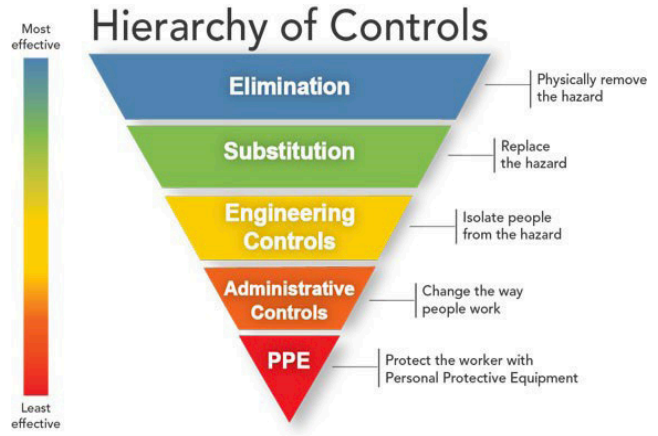
The goal is to start at the top of the hierarchy and work down, focusing first on solutions that address the root of the hazard instead of just reacting to it. Too often, we jump to the quickest or most visible fix, like issuing PPE or posting warning signs, but those controls rely heavily on individual behavior and consistent compliance. They don’t actually remove the danger from the environment.
This shift in approach moves safety from being reactive to being proactive. It prioritizes long-term, sustainable solutions over short-term patches. While it’s not always possible to eliminate every risk, working through the hierarchy ensures we’ve considered all reasonable options before settling on the least effective ones. In the end, it leads to safer workplaces, fewer incidents, and more confidence among employees that their well-being is being thoughtfully addressed, not just managed.
What Could This Look Like in Your City?
Let’s look at a few examples:
Public Works: Handling a Chemical Product
Hazard: Workers are using a cleaning agent that causes skin irritation
Common Fix: Use gloves and goggles
Better Approach:
Substitute with a safer product that doesn’t require PPE
If that’s not possible, engineer a dilution system or enclosed dispensing unit to reduce exposure
Streets & Parks: Leaf Blower Noise
Hazard: Prolonged exposure to loud equipment
Common Fix: Hearing protection
Better Approaches:
Eliminate by switching to manual tools (e.g., rakes, brooms) in low-traffic areas
Substitute with battery-powered models that run quieter
Add administrative controls like rotating job duties and limiting usage times
City Hall Front Desk: Public Interaction Risk
Hazard: Aggressive visitor behavior
Common Fix: Add signage or rely on employees to manage situations
Better Approaches:
Engineer a physical barrier or panic button
Adjust administrative policies for visitor protocols and incident response
Why It Matters
Using the hierarchy helps cities:
Solve safety issues more permanently
Reduce liability and long-term costs
Show employees that safety is more than just a checklist—it’s a process
It also helps cities comply with OSHA’s General Duty Clause, which requires employers to provide a workplace free from recognized hazards.
Not every hazard can be eliminated. But working through the hierarchy, starting from the top, forces us to ask better questions and find better answers. It shifts the mindset from “What gear do we need?” to “Why is this risk here in the first place?”
View more OSHA-provided information on the hierarchy of controls.