

 or
 lines to the right of the URL bar at the top of your browser

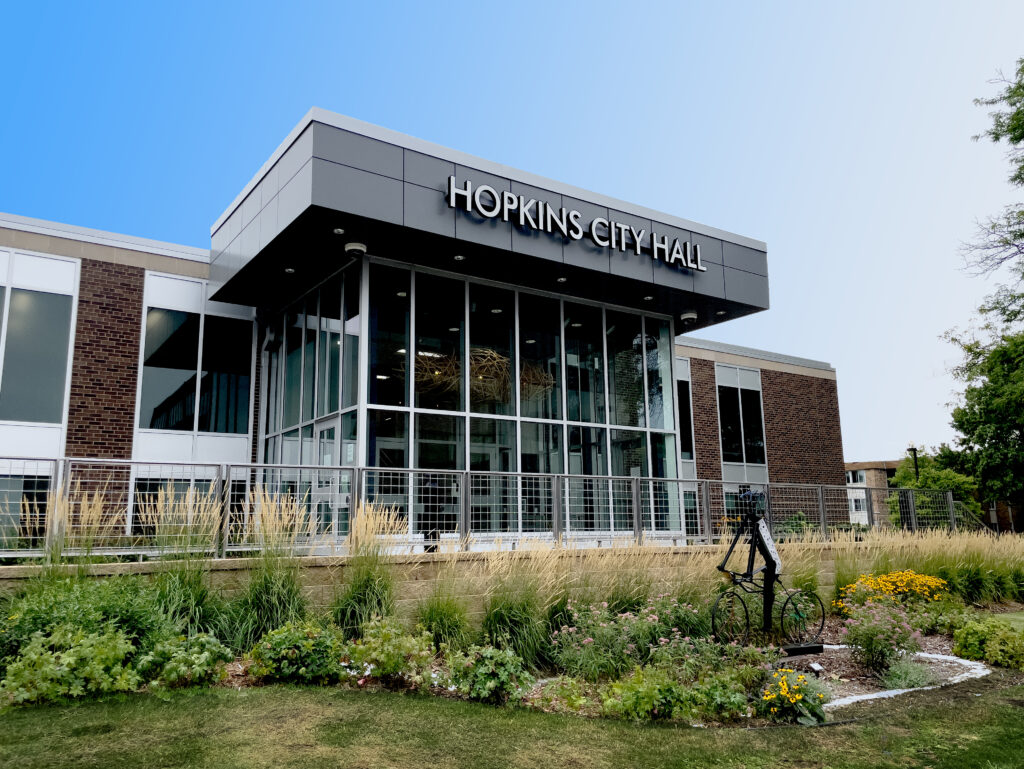
 Hopkins’ Volunteer Time Off Program
City employees dedicate their careers to serving their communities. But what if they could take that commitment a step further by volunteering for local organizations and initiatives during their regular workday?
That’s the idea behind a new volunteer time off (VTO) program launching in the City of Hopkins in January 2027. The program will provide eligible employees with up to eight hours of paid time annually to volunteer for community-focused initiatives, creating new opportunities to connect with the residents, businesses, and organizations they serve.
An idea rooted in community
The idea emerged from conversations within Hopkins’ employee engagement and wellness group, a committee with representatives from across city departments that meets quarterly to discuss opportunities to improve the employee experience.
According to Laura Wolfson, the city’s HR manager, giving back to the community was a recurring topic.
“We kept saying it would be so nice if we could give back to the community a little bit,” Wolfson said.
Although Hopkins is located just outside Minneapolis, Wolfson describes the community as offering the best of both worlds: convenient access to a major metropolitan area while maintaining its own close-knit, small-town charm. City employees already participate in community events and initiatives, and the committee saw an opportunity to build on those relationships.
“We thought this would be great to give back to the community that we serve,” she said.
The idea also gained momentum from employees who had participated in similar volunteer programs while working in the private sector. Their experiences prompted the committee to explore what a VTO benefit could look like in local government.
With local nonprofits, community events, and service organizations already providing opportunities to get involved, Hopkins had plenty of potential places for employees to contribute.
How the program works
Beginning in January 2027, Hopkins will provide eight hours of paid VTO annually to regular full-time employees and four hours to regular part-time employees.
Participation is voluntary, and employees can use the benefit to support eligible community initiatives during their scheduled work hours.
Potential volunteer activities include helping with community events such as National Night Out, participating in city tree-planting efforts, or supporting local nonprofit organizations.
To balance flexibility with accountability, Hopkins developed a written policy outlining eligibility, approval requirements, and appropriate volunteer activities.
Employees will be asked to submit requests at least two weeks in advance and receive approval from their direct supervisor. Human resources will review volunteer activities for eligibility, working with supervisors to determine whether an opportunity aligns with the program’s guidelines.
While the program prioritizes Hopkins-based activities, the city may consider opportunities outside its borders on a case-by-case basis.
Employees will request VTO through a form available on the city’s intranet, and their available hours will be tracked through payroll.
Once employees have used their allotted hours, the benefit is exhausted for the year.
Making it work across departments
One of the biggest considerations in developing the program was ensuring employees across different departments would have a meaningful opportunity to participate.
For employees with more traditional office schedules, accommodating a few hours of volunteer time may be relatively straightforward. But public safety departments face additional challenges, including minimum staffing requirements and around-the-clock shifts.
Wolfson recognized that those differences would need to be addressed before the program launched.
“I want to make sure this program is going to be equitable to your staff, because the last thing I want to do is roll something out, and then your staff really wants to engage in this but they’re not able to,” she recalled telling the city’s police and fire chiefs.
Both chiefs supported the idea and expressed a willingness to work through scheduling challenges.
“I will be curious to see how many of our first responders use the program,” she said. “That will be some of the feedback we’re going to gather for next year, too.”
A small investment to get started
For cities concerned about the administrative work involved in creating a similar program, Hopkins’ experience suggests the initial setup can be relatively manageable.
After discussing the concept with the employee engagement and wellness group, Wolfson prepared a proposal for the assistant city manager and city manager, who reviewed and approved it. She estimates that preparing the proposal took approximately two hours. Introducing the benefit to employees during open enrollment sessions required another half-hour, with an additional one to two hours anticipated for payroll implementation.
Ongoing administration, including reviewing requests, tracking usage, and evaluating costs, will require additional staff time.
The city also recognizes that paid volunteer hours represent an investment. As the program gets underway, Hopkins plans to track participation, hours used, and associated costs to better understand its impact.
Advice for other Minnesota cities
For cities considering their own volunteer time off programs, Wolfson recommends starting with employee input and bringing representatives from different departments into the conversation early.
“If you don’t have an employee engagement group or you don’t have a wellness committee, I would probably say get some key players at the table,” she said. “Ideally one person from each department to get a feel for [the program] and ask if this is something they feel could potentially work.”
Having the police chief and public works director involved in Hopkins’ engagement group helped build support early and gave the committee insight into operational considerations.
Beyond gathering feedback, Hopkins’ experience highlights several considerations for cities exploring a similar benefit:
- Start with a cross-departmental conversation. Gauge employee interest, identify potential obstacles, and involve department leaders before developing a formal proposal.
- Establish clear guidelines. Define eligible employees, volunteer opportunities, approval processes, and scheduling expectations.
- Consider different staffing needs. Work with supervisors to determine how employees with varying schedules and operational responsibilities can participate.
- Build on existing community partnerships. Identify nonprofits, events, and local initiatives that could benefit from additional volunteers.
- Evaluate the program over time. Track participation, hours, costs, and employee feedback to determine what’s working and where adjustments may be needed.
Strengthening connections beyond City Hall
Although Hopkins won’t officially launch the program until January, Wolfson has already seen encouraging reactions from employees and community organizations.
During the city’s open enrollment sessions, several employees expressed interest in the benefit. A local animal shelter also reached out about potential volunteer support even before the program received final approval.
Ultimately, the program’s goal extends beyond providing another employee benefit. It’s about creating additional opportunities for city staff to engage with residents, support local organizations, and build relationships outside their day-to-day responsibilities.
“I think that overall strengthens the community when you see the employees who work for the city also wanting to give back to the city that they work for whether it be the businesses or the residents,” Wolfson said.