

 or
or  lines to the right of the URL bar at the top of your browser
The LMCIT Board of Trustees has approved a $20 million dividend for the workers’ compensation program, reflecting the continued strength and financial health of the fund balance. The dividend will be distributed later this fall to members participating in the workers’ compensation program as of Sept. 1, 2026.
Members are encouraged to consider using their dividend to strengthen employee safety and loss control efforts. Investments in training, equipment, and other risk management initiatives can help reduce workplace injuries and claims over time, supporting healthier organizations and contributing to the long-term strength of the insurance pool.
No dividend was approved for the property/casualty program this year. The Board determined it was prudent to retain available funds to support the program’s long-term financial strength in light of ongoing market and claims uncertainty. Maintaining a healthy fund balance allows LMCIT to support future rate stability while providing additional flexibility as the program adjusts to higher property and liability reinsurance retention levels.
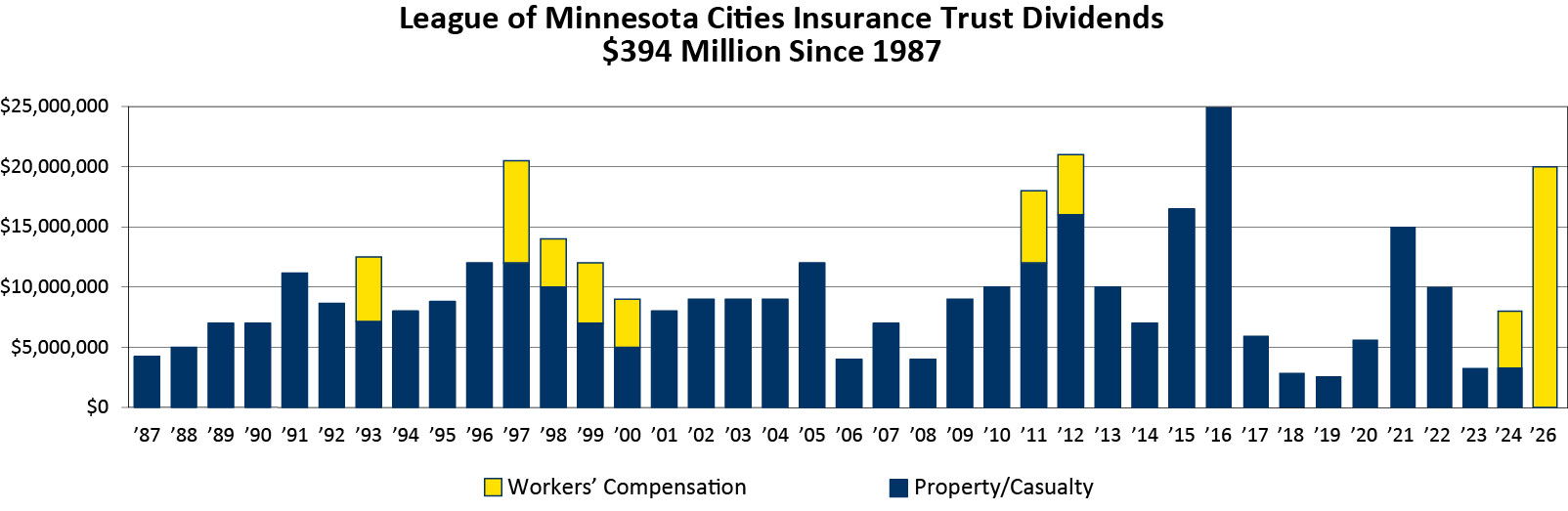
LMCIT’s workers’ compensation and property/casualty programs are owned by the members of each program. If the LMCIT Board of Trustees determines a program has more funds than necessary to cover operating expenses and current and projected claims, the Trustees may return a portion of those funds to members in the form of a dividend. The workers’ compensation dividend reflects the Board’s confidence in the program’s strong financial position while maintaining prudent reserves for future obligations.
While rate stability remains a primary goal of LMCIT, unexpected external factors can sometimes make that challenging. For example, based on the best actuarial projections and claims information available at the time, workers’ compensation rates increased over several years to ensure the program remained adequately funded. Fortunately, claim development has been more favorable than originally anticipated, strengthening the fund balance and contributing to the Trustees’ decision to authorize this dividend.
That experience also reinforced the importance of developing new strategies to promote long-term rate stability during periods of uncertainty. One example is LMCIT’s internal reinsurance fund, which allows the organization to retain more risk in response to a challenging and increasingly expensive property reinsurance market, much like a homeowner with sufficient savings choosing a higher deductible in exchange for lower premiums.
The Trustees will continue to evaluate the best use of excess funds, whether through member dividends or strategic investments that strengthen the programs over the long term. Their ongoing goal is to provide broad, affordable, and stable coverage while supporting members’ efforts to reduce losses and create safer workplaces.